

Auburn basketball is getting back to going deep
After falling to No. 345 nationally in bench minutes, the Tigers have loaded up on new pieces. That should go a long way in how they play.
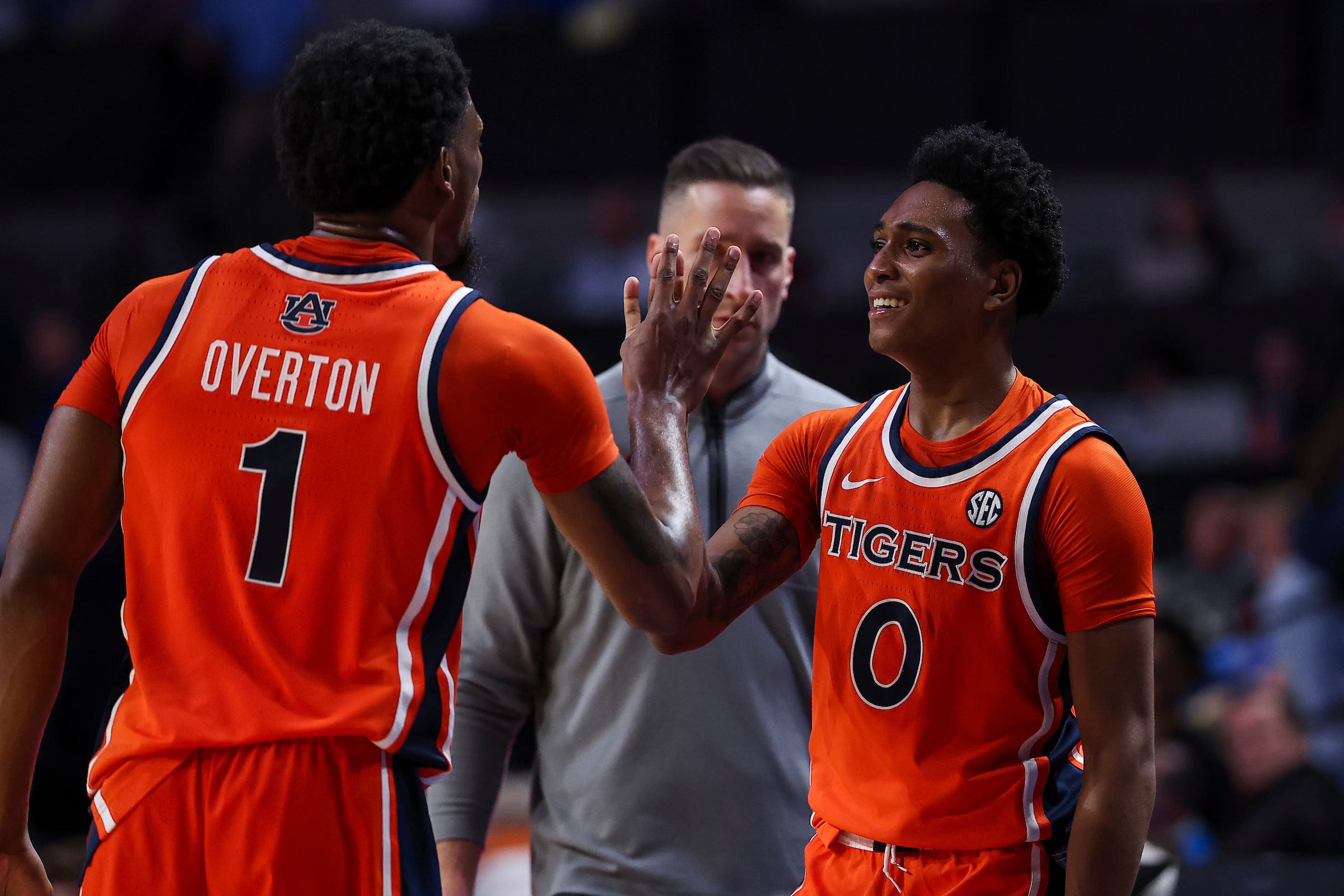
LAKE MARTIN — Let’s begin with a stat.
On KenPom, there’s a number that measures the percentage of minutes played by the bench of a college basketball team. The deeper you are, the higher the percentage.
Here is where Auburn ranked nationally in Bench Minutes since Bruce Pearl’s arrival:
2014-15: 123rd
2015-16: 59th
2016-17: 19th
2017-18: 195th
2018-19: 151st
2019-20: 199th
2020-21: 116th
2021-22: 84th
2022-23: 84th
2023-24: 7th
2024-25: 164th
2025-26: …345th
In these 12 seasons, Auburn has been in the top half of Division I basketball in Bench Minutes nine times. It has been in the top fourth, roughly, six different times.
And, last season, Auburn was just outside the bottom 20 in that category. There were only three high-major teams that relied on its bench less: Texas Tech, Pittsburgh and Minnesota. Texas Tech went to the NCAA Tournament but got bounced in the second round while dealing with significant injuries. The other two teams had losing records.
This wasn’t a dedicated shift in philosophy by new head coach Steven Pearl. In fact, it was quite the opposite. The Tigers wanted to continue rolling with one of the biggest rotations among their peers. They wanted to lean on strength in numbers, which had been central to the program’s identity since it started winning titles.
That didn’t happen.
Two JUCO transfers expected to fight for minutes, wing Abdul Bashir and center Emeka Opurum, played a combined 112 minutes across what turned out to be a 38-game season. Neither saw action past the Players Era Festival in November. Bashir never got fully going after dealing with a back injury for most of the preseason. Opurum had to be shut down due to an undisclosed health issue.
On top of that, Auburn’s two freshman guards — Kaden Magwood and Simon Walker — combined for just 282 minutes. Only 34 of those came in SEC play. Pearl cited defensive issues for their absences in the rotation. Walk-on Blake Muschalek was used in short spurts to give the starting backcourt some much-needed breathers, averaging just 5.4 minutes across 27 games for the Tigers.
Auburn was left with a roster that switched back and forth between a seven- and an eight-man rotation for most of the season. Three Tigers averaged 30-plus minutes per game, which were as many as the program had in the previous five seasons combined. It was by far the shortest and least-used bench of the Pearl Era.
This had a massive impact on what was an adversity-filled Year 1 under the younger Pearl. Auburn’s offense didn’t play at the fast pace that was envisioned when it brought back Tahaad Pettiford. Much more importantly, the Tigers’ defensive analytics cratered. Auburn didn’t have the depth to crank up the perimeter pressure and minimize the rim-protection problems that came with having only one true center.
Auburn still found ways to grind out some quality wins against one of the toughest schedules in college basketball. But the lack of depth wore on the Tigers over time, especially when they lost eight of their final 10 regular season games to fall completely out of the NCAA Tournament picture and into the NIT field.
While injury luck is a nebulous thing for any team, Pearl and his staff knew they could not enter Year 2 with a similarly structured roster. Auburn emphasized adding more experience after dealing with an extremely young team, more size after all the defensive woes and more shooting after the streakiness of the offense on jumpers.
And, perhaps most of all, Auburn emphasized adding more depth.
“It goes back to what we’ve done in the past,” Pearl said earlier this week, prior to the Pearl Family Foundation Golf Classic at Wicker Point Golf Club.