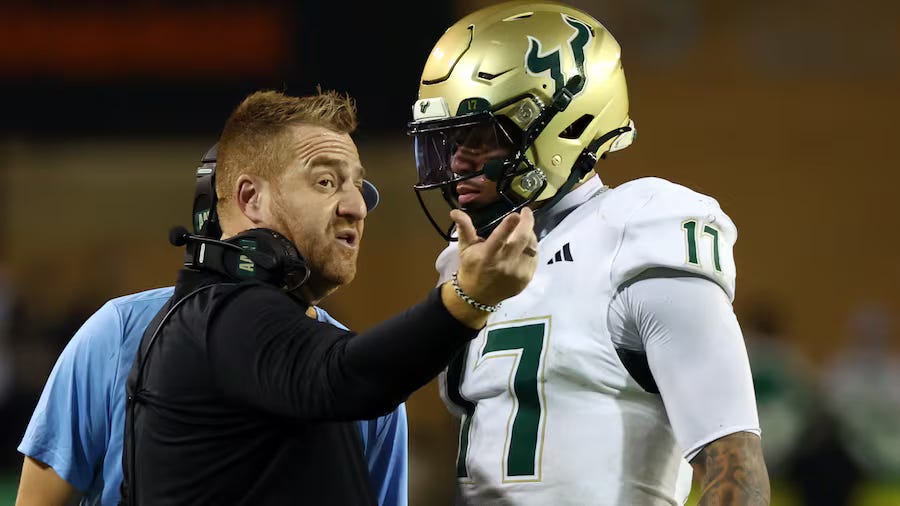
What should Auburn expect from an Alex Golesh offense?
Auburn's new head coach has a track record of high-level offenses across several stops. Here's a deep dive into what makes them go.
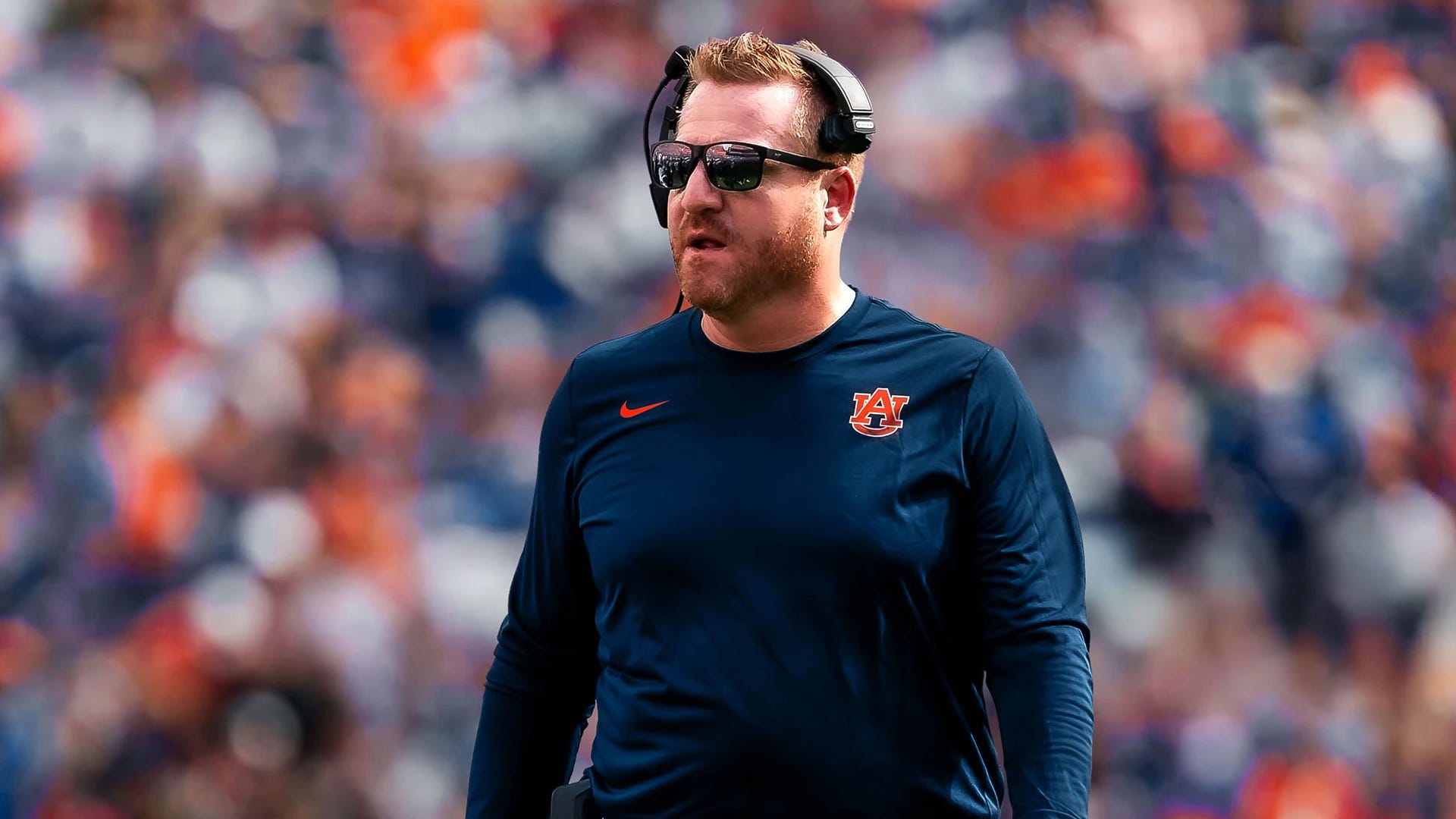
AUBURN — There’s no question that Auburn football has been searching for a great offense for the better part of the last decade.
After winning the SEC and crashing the national championship game in 2013 in its first year under Gus Malzahn, Auburn ranked No. 6 nationally in offensive EPA per play — an advanced statistic that weighs the result of every snap within context — in 2014, according to Game On Paper.
Since then, it’s been mostly a long slide down for the Tigers: 38th in 2015, 54th in 2016, 41st in 2017, 94th in 2018, 74th in 2019 and 49th in 2020. After firing Malzahn, Auburn was 75th in 2021 under Bryan Harsin and 91st in 2022, when it fired him midseason. Hugh Freeze was supposed to get Auburn back there, but his offenses finished 84th, 85th and now 77th in EPA per play.
(And for those of you who might be saying, “Well, didn’t Freeze put up great offensive numbers in the Group of Five before coming to Auburn?” — the answer is, no, not like these. Freeze’s Liberty offenses finished no higher than 48th in EPA per play during his time as head coach there, and it was 97th in the year before he got to Auburn.)
Yes, it’s been a decade since Auburn had an offense inside the top 40 nationally, much less one that was elite. Meanwhile, the defense has often been a strong one both by SEC and power-conference standards. Yet the Tigers have now had five straight losing seasons, a new low mark for the program in the modern era.
Auburn is hoping the man who can change all that is Alex Golesh, who was officially hired Sunday morning as its new head coach. Golesh has spent the last three seasons at USF, which came right after two seasons as an offensive coordinator at Tennessee and one as a co-offensive coordinator at UCF under Josh Heupel.
Golesh will be in charge of the entire program, but make no mistake: Auburn is hiring him for his work on the offensive side of the ball — which has been highly regarded across multiple schools, including this most recent one at USF.
The 2025 USF offense is No. 10 in SP+, which is an opponent-adjusted ratings system. This means that, even though USF might not have played a loaded schedule in the AAC this season, the offensive production on a per-play basis is still one of the 10 best in college football right now. In the basic stats, the Bulls are in the top five nationally in yards per play and points per game this season.
But this isn’t new territory for Golesh, even though 2025 has been his true breakout season at USF. In four of his last six seasons as a college coach, he’s been a part of offenses that have finished inside the top 20 nationally in EPA per play — including back-to-back top-six finishes at Tennessee, an SEC school, in 2021 and 2022.
Golesh has been on the cutting edge of offensive football over the last several seasons in the collegiate ranks, taking what he’s learned over more than two decades of coaching and applying it to a feared and fast-paced attack.
The production speaks for itself, especially considering where Tennessee and USF were before his arrival. Tennessee was one of the worst power-conference offenses in the country prior to Heupel and Golesh getting poached from UCF. USF was one of the worst teams in the country, winning just four games in the previous three years.
Golesh will hope to bring his offensive touch to an Auburn program that has struggled much more on that side of the ball since the last time it was an SEC contender. Good-to-great defenses are the norm on the Plains. Offenses? Not as much recently.
But what are the hallmarks of Golesh’s offenses? What might Auburn fans expect from its attack moving forward in this new era? Here’s a deep dive into the numbers and the production of Auburn’s new head coach.