

Auburn basketball needed to get bigger and older. But that's not all.
Don't overlook how much 3-point shooting the Tigers added this offseason. Remember the last time they made that kind of effort there?
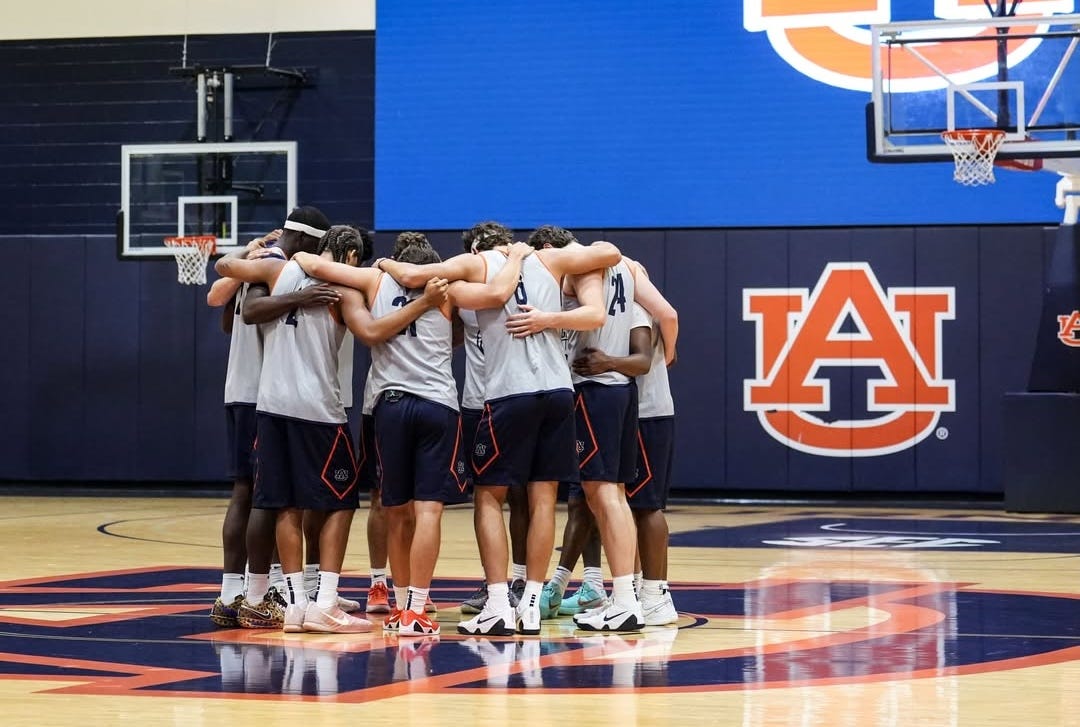
AUBURN — In hindsight, it was rather fitting that the final official made field goal of Auburn’s 2025-26 basketball season was an absolute bomb of a 3-pointer from the hands of Kevin Overton off of an assist from Tahaad Pettiford.
Less than a couple of months later, Pettiford and Overton would stand together as the returning starters from Auburn’s offseason roster overhaul — one that watched seven players exit and seven more enter the program.
As Auburn head coach Steven Pearl laid out in a 1-on-1 interview with The Observer last month, the Tigers had several boxes they wanted to check with the way they retooled their look for next season: They got “a lot bigger” and “a lot older” — and they also got “a little more shooting.”

Last season, Auburn finished 147th nationally in 3-point percentage — about the smack middle of Division I — by shooting 34.4% from deep as a team. It was a step back from the previous two seasons, when the Tigers shot 35.9% (67th) and 35.2% (109th) in campaigns that featured some form of SEC championship hardware.
The biggest problem for Auburn in a season in which it fell short of reaching the NCAA Tournament and had to settle for an NIT run was, of course, the defense. It’s been well-documented how far the Tigers fell from their recently elite status on that end, with a lack of rim protection and overall cohesion leading to rough numbers.
But some regression in 3-point shooting, even for an offense that finished the season No. 11 nationally in KenPom in adjusted efficiency, stood out at times. There was real inconsistency from beyond the arc, particularly in a losing skid that defined the second half of SEC play.
Auburn went 13-5 last season when it shot better than 33% from 3-point range in a game. That’s a winning percentage of 72.2%. That also means that it went just 9-11 when it was below that mark, a percentage of 45%.
Auburn also went 10-2 last season when it hit at least 10 3-pointers in a game, a mark that it hit 16 times in a historic campaign a year earlier. The Tigers were 12-14 when they were in the single digits. (Oddly enough, they were 9-3 when they hit six or fewer 3s in a game. The danger zone, apparently, was a low-efficiency seven to nine 3s.)
During its 5-0 run to finish the season with an NIT championship, Auburn shot 38% from 3-point range as a team and averaged 10.8 makes per game. While a step down to mid-major defensive competition was part of that calculus, consider that Auburn shot just 28.4% from deep against non-power opponents back in November.
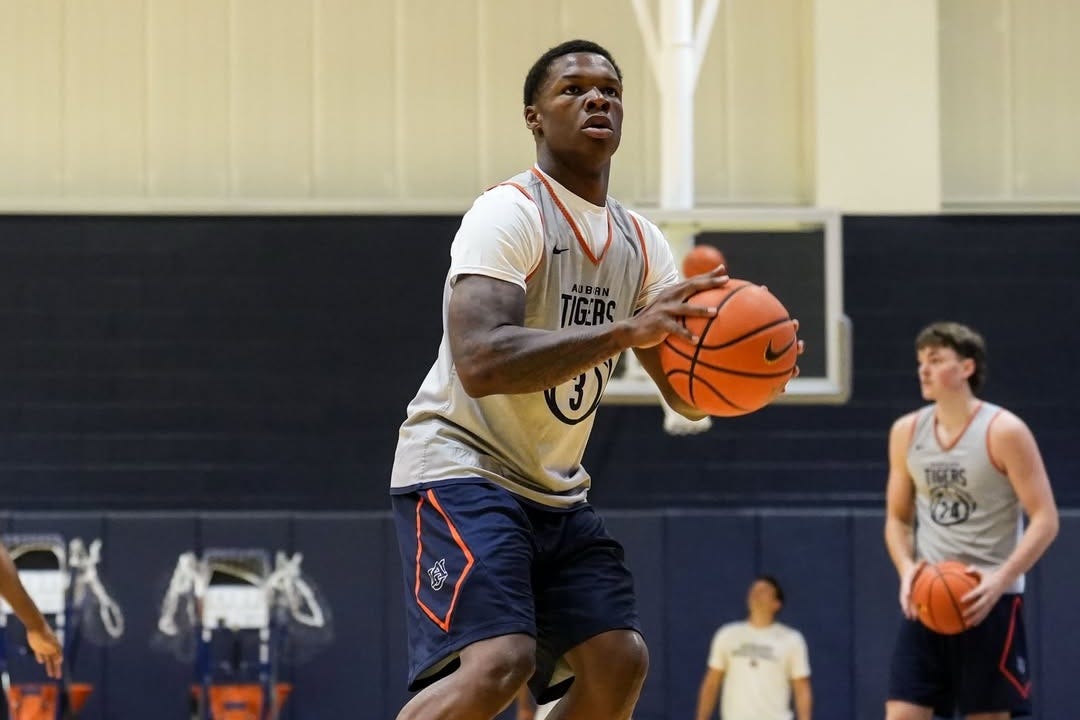
The top priority for Auburn this offseason was getting bigger, because size was sorely lacking from its previous roster construction. Adding more Division I basketball experience was another need, considering how much of last season’s team was made up of players who had never played at this level.
But the Tigers added both of those components while also adding more firepower from 3-point range. When you compare what left Auburn to what joined it, the results are significant.